

Detour Art.
A curated guide to Artist-built Environments and other creative places.
region by region, coast-to-coast.
Dedicated to the sheer joy of outsider, folk, visionary, self-taught, vernacular art and environment discoveries found all along the back roads (and side streets).

What is an artist-built environment?
An artist-built environment is a space shaped over time by an individual — often self-taught — who transforms land, home, or property into a fully immersive work of art.
These places might look like visionary yards, handmade architecture, sculptural gardens, roadside installations, or entire landscapes reimagined piece by piece. They are usually built outside traditional art systems — without institutional backing, formal training, or commercial intent.
They are made because someone needed to make them.
Some are preserved. Some are fragile. Some have already disappeared.
Detour Art
Detour Art is my ongoing documentation of these environments across the United States.
I travel to these places, photograph them, and gather whatever history I can find — tracing origin stories when possible and returning when the light, the weather, or the story shifts. Everything here is hand-curated and personally documented.
Because many of these environments are vulnerable to weather, development, or neglect, documentation becomes part of preservation. I share my photography with S.P.A.C.E.S. (Saving and Preserving Arts and Cultural Environments) so researchers and restoration teams can track how sites evolve over time and, when possible, restore them closer to the artist’s original vision.
This work sits somewhere between field study, archive, and love letter.
Why these places matter
Artist-built environments expand our understanding of who gets to be called an artist. They challenge the line between art, architecture, and devotion. They remind us that creativity often happens quietly, stubbornly, and without permission.
Many were built over decades. Many were built alone. All deserve to be seen.



Artist-built Environments in the United States.
Note: Things change, so check first before arriving. When visiting art environments, remember they are usually on private property, so please be respectful and don’t trespass.
Hello, World!
Road stories.

Fox Point Art Yard - Mary Nohl
Mary Nohl’s lakeside cottage and yard are replete with sculptures, paintings, and decorative elements. Inspired by her life on the shore of Lake Michigan, Nohl used every imaginable material to construct a colorful and whimsical world. The yard features fifty-nine concrete sculptures, many figural and life-size. Inside the house, almost every surface is adorned; she hand made stained glass, painted her furniture and walls using carpet swatches as brushes, and displayed her paintings and ceramics.
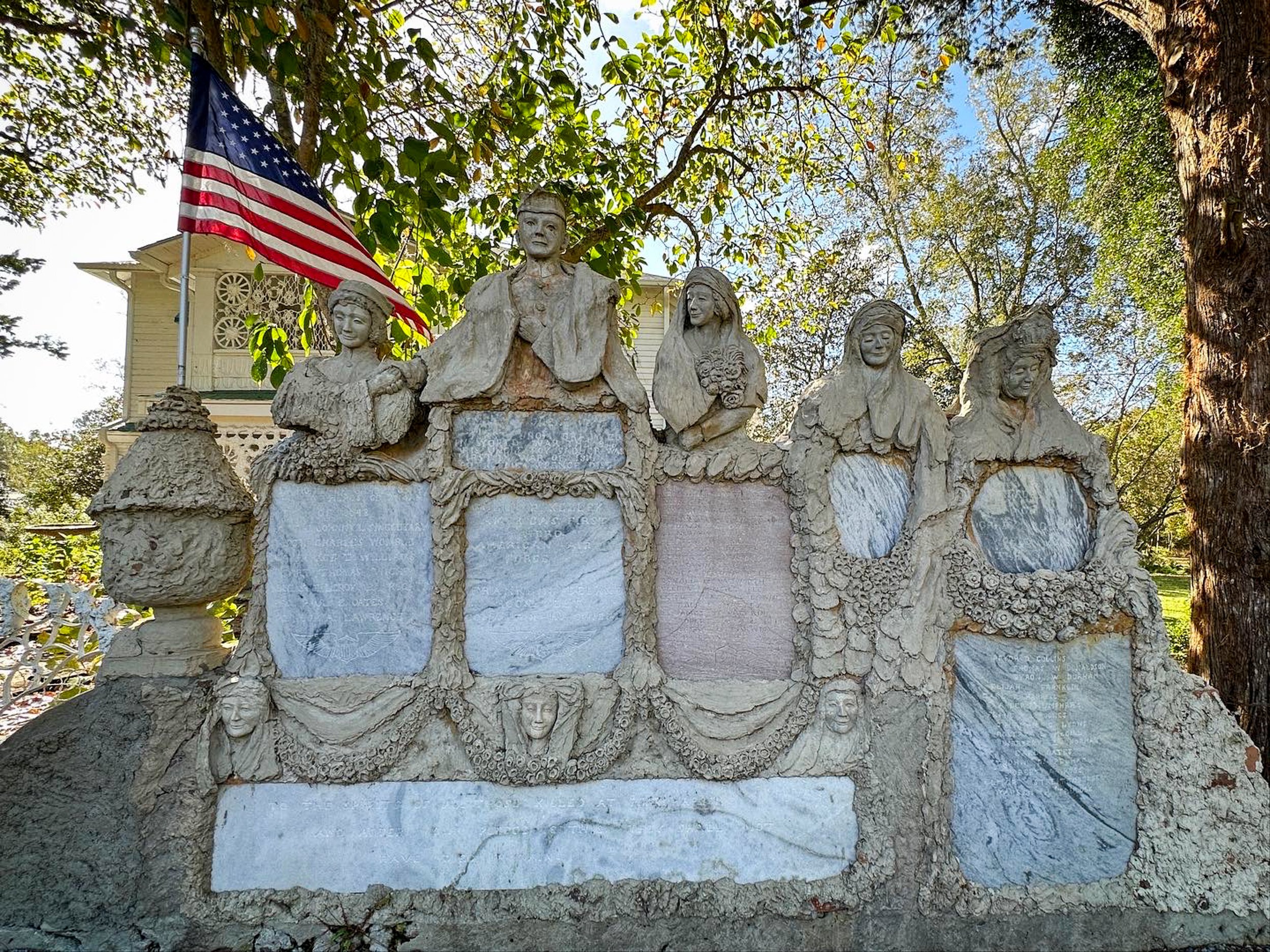
Mrs. Pope's Museum - Laura (Forester) Pope
Laura Pope built a sculpture garden that surrounded her general store and house in a rural area near Ochlocknee, Georgia. It once included about 200 accomplished life-size cement figures of famous women and heroes of both World Wars, Martha Berry, Red Cross, Gold Star Mothers, and many others, including local school teachers.

Clementine Hunter and the Melrose Plantation
Clementine Hunter was a self-taught Black folk artist from the Cane River region of Louisiana, who lived and worked on Melrose Plantation.
Hunter was born into a Louisiana Creole family at Hidden Hill Plantation near Cloutierville, in Natchitoches Parish, Louisiana. She started working as a farm laborer when young, and never learned to read or write. In her fifties, she began to sell her paintings, which soon gained local and national attention for their complexity in depicting Black Southern life in the early twentieth century.
Initially she sold her first paintings for as little as 25 cents. But by the end of her life, her work was being exhibited in museums and sold by dealers for thousands of dollars. Clementine Hunter produced an estimated 5,000 to 10,000 paintings in her lifetime.

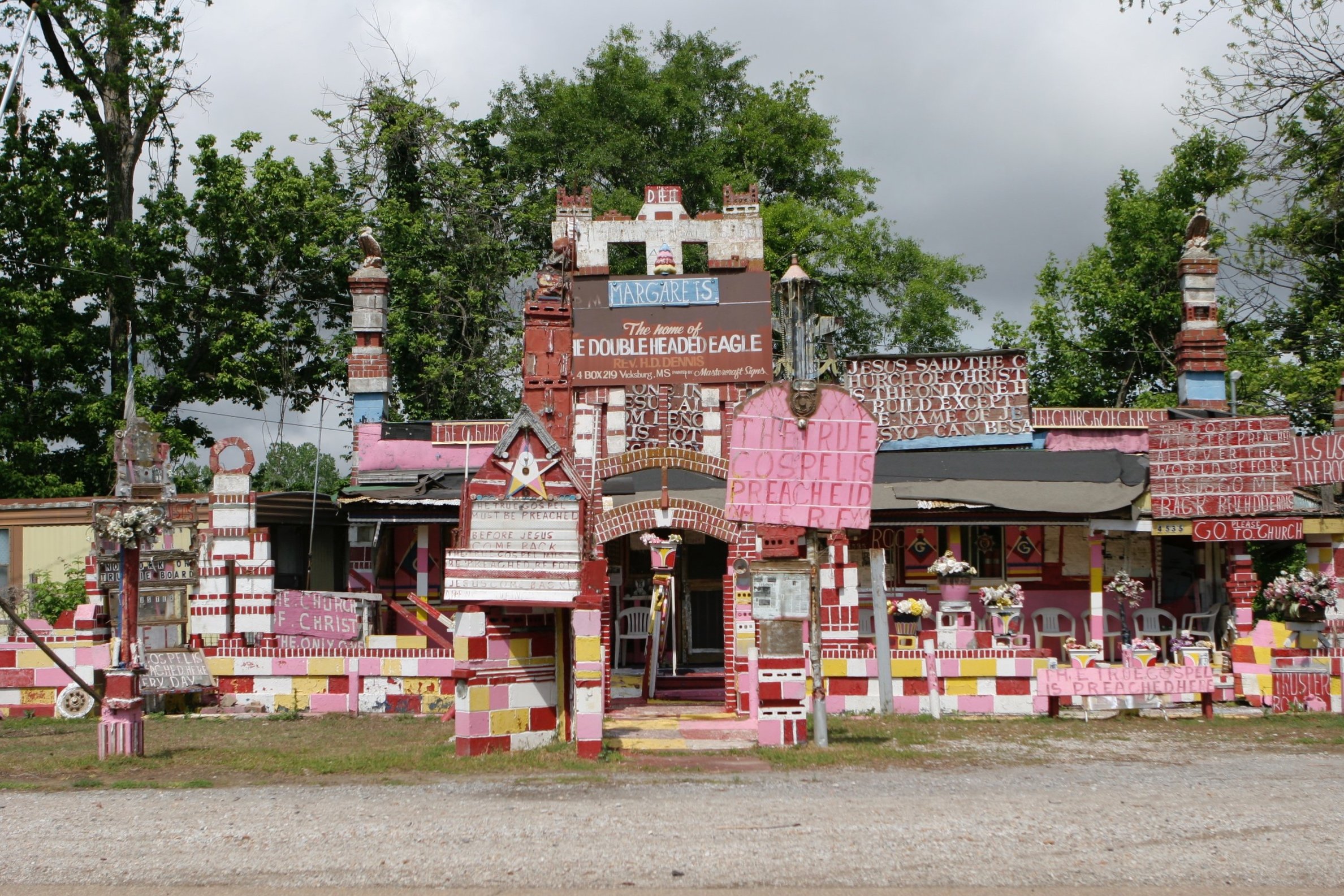
Margaret's Grocery and Market - Rev. Hermon D. and Margaret Dennis
Between 1959 and 1979, Margaret’s Grocery was the only grocery store owned and operated by a Black woman along Highway 61. Rev. Dennis painted the building red, white, and some blue, but Margaret added the crowning touches of pink and yellow. "You can't have a bouquet of flowers without different colors. We're all God's children." This premier folk art environment has fallen into disrepair with hopes that the Mississippi Folk Art Foundation can do restoration.
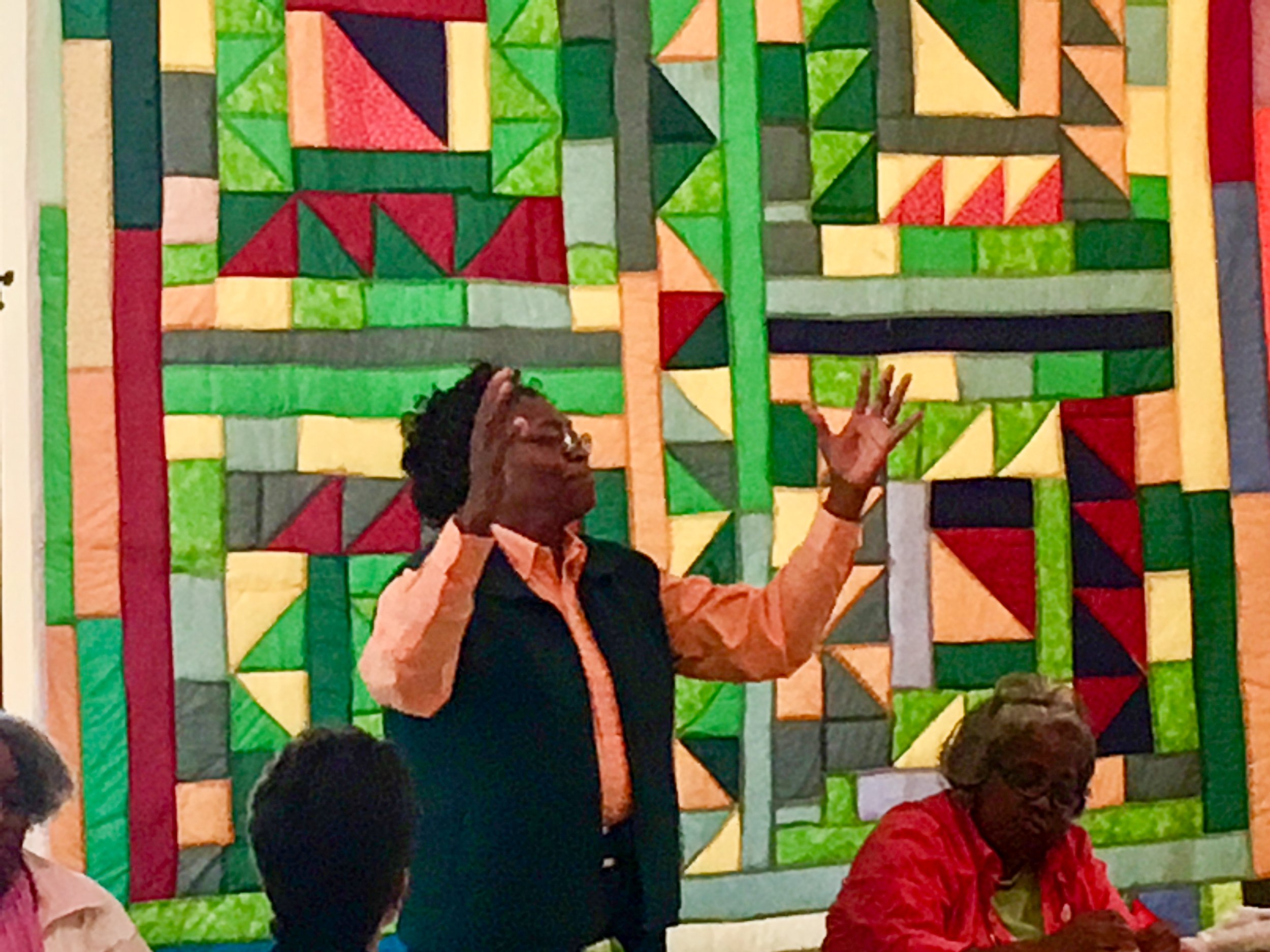
The Quilters of Gee’s Bend
Gee’s Bend is a small rural community nestled into a curve in the Alabama River. The town’s women developed a distinctive, bold, and sophisticated quilting style based on traditional American (and African American) quilts, but with a geometric simplicity reminiscent of Amish quilts and modern art. The women of Gee’s Bend passed their skills and aesthetic down through at least six generations to the present.
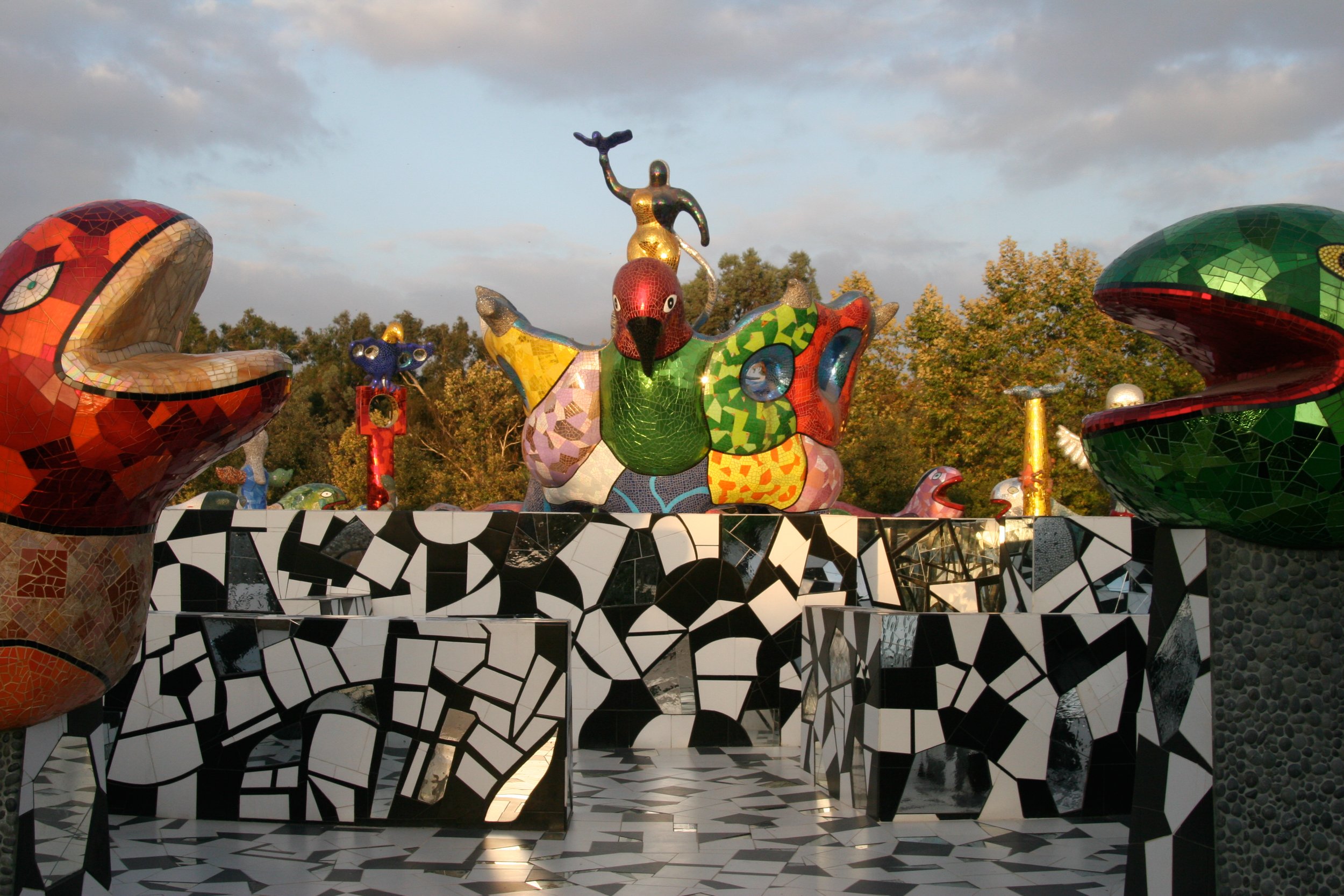
Queen Califia's Magical Circle - Niki de Saint Phalle
Snakes atop the walls, fabulous mosaics and a giant eagle with an Amazon warrior guiding it, Those are just some of the elements of the Magic Circle, created by Kiki de Saint Phalle, a French-born self-taught artist whose large scale sculptures earned her accolades in Europe. Influenced by figures such as Jean Dubuffet and Antoni Gaudi, she made her reputation in the Sixties with a series of giant female figures, the “Nana’s”.